
Urological Surgeryইউরোলজিক্যাল সার্জারি
Urological procedures can use endoscopic, laparoscopic or open/general surgical approaches depending on the condition, anatomy, size, severity and clinical need.
Surgery
Surgery
Surgery
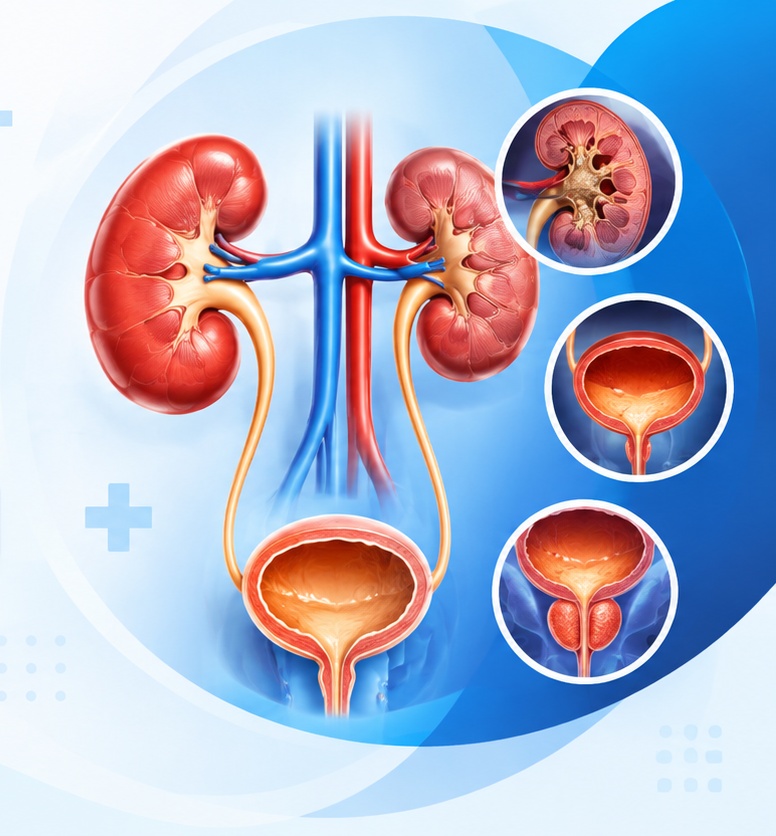
Endoscopic procedures
Endoscopic techniques use a viewing instrument passed through a natural opening or a small access route to examine or treat parts of the urinary tract. For example, ureteroscopy can be used to inspect and treat some urinary stones.
Laparoscopic surgery
Laparoscopic surgery uses small abdominal incisions and a camera/instruments. It may be considered for selected urological operations when clinically appropriate.
General urological surgery
Some conditions require conventional surgical approaches. The choice depends on the diagnosis, anatomy, previous procedures, overall health and expected benefit/risk.
Before a procedure
Patients may need medical history review, examination, blood/urine tests and imaging. The exact preparation depends on the procedure and anesthesia plan.
After a procedure
Recovery varies widely. Patients should follow the operating team’s instructions about medicines, wound care, activity, hydration, catheter/stent care and follow-up.
Frequently Asked Questions
Is laparoscopic surgery suitable for every patient?
No. The appropriate approach depends on the diagnosis, anatomy, prior surgery and overall clinical situation.
Are all urinary stones treated with surgery?
No. Some small stones pass without a procedure; other stones may require an intervention depending on size, location, symptoms and obstruction.
Medical information sources
Need a urology consultation?
For persistent or concerning urinary, prostate, kidney, testicular or sexual-health symptoms, arrange an appropriate medical assessment.