
Kidney Stonesকিডনিতে পাথর
Kidney stones are hard deposits that form in the urinary tract. Their symptoms and treatment depend on their size, location and composition.
Pain
Urine
Changes
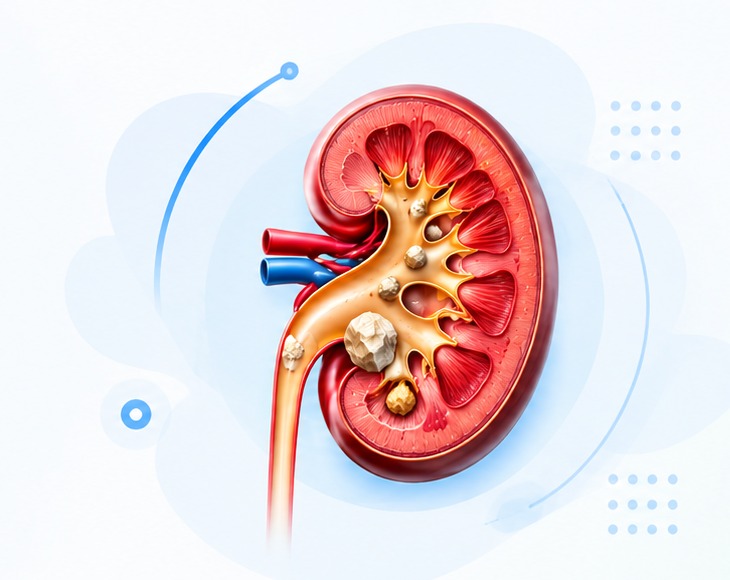
Common symptoms
- Sharp pain in the back, side, lower abdomen or groin
- Blood in the urine
- Pain or burning during urination
- Frequent urge to urinate or difficulty passing urine
- Nausea, vomiting, fever or chills may occur
When to seek medical care
Severe pain, blood in the urine, inability to pass urine, fever/chills, or persistent vomiting should be assessed promptly. A blocked urinary tract with infection can require urgent treatment.
Diagnosis
A clinician may use the history and physical examination together with urine or blood tests and imaging to determine whether a stone is present and where it is located.
Treatment
Small stones may pass without a procedure. Depending on the stone, a urologist may consider medicines, shock-wave treatment, ureteroscopy or other stone-removal procedures. Larger or obstructing stones may require more urgent treatment.
Prevention
Adequate fluid intake is commonly important for preventing many kidney stones, but the right amount depends on health status, climate and activity. After a stone, testing its type and sometimes a 24-hour urine evaluation can help guide prevention.
Frequently Asked Questions
Can a small kidney stone pass on its own?
Some small stones can pass through the urinary tract without a procedure, but a clinician should guide care when symptoms are significant or complications are possible.
Is severe kidney-stone pain an emergency?
Severe or persistent pain, fever/chills, vomiting, blood in urine or inability to urinate warrants prompt medical assessment.
Medical information sources
Need a urology consultation?
For persistent or concerning urinary, prostate, kidney, testicular or sexual-health symptoms, arrange an appropriate medical assessment.